
From an anthroposophical perspective, the following themes are important and characteristic in raising young children and supporting their development.
Calm and rhythm
Calm, rhythm and repetition give children a sense of security and self-confidence. Young children thrive in a calm atmosphere. Our day follows a steady rhythm that also fits in with the routine the children are used to at home. This brings structure and calm to the group. Moments of activity alternate with moments of rest, like breathing in and breathing out.
The year has a rhythm too, and we give it plenty of attention by celebrating the seasonal festivals. These festivals express our connection with nature and with our culture. Through stories, songs, games and activities around each festival, we help the children feel this connection inwardly. The seasons are also reflected in how the group rooms are decorated, for example on the seasonal table. It has a prominent place in every group room and is carefully set up again with each change of season.
Imitation
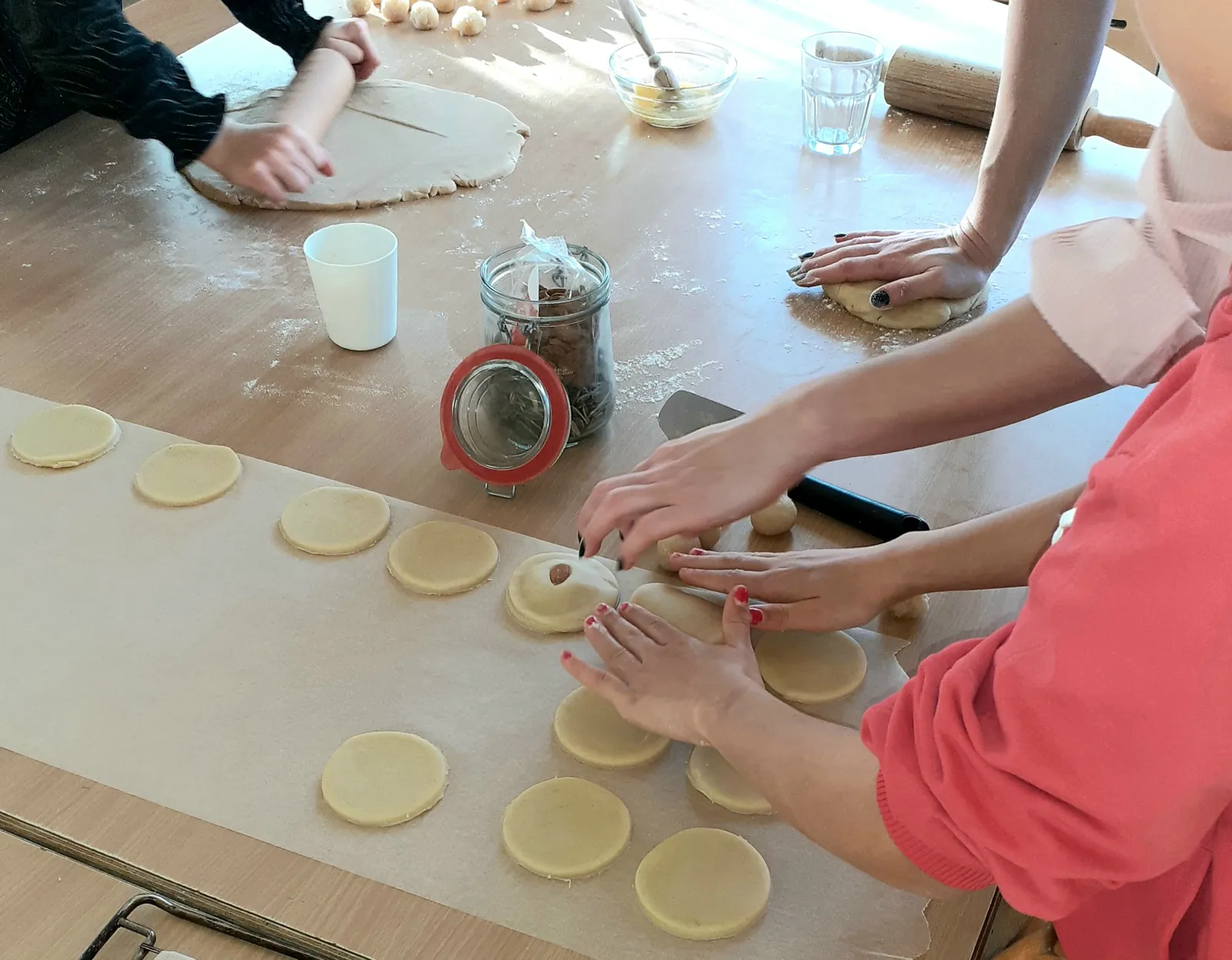
Young children imitate the adults around them. This is how they learn to walk and talk, but also how they pick up the way adults treat each other and the things around them. That is why it matters so much that our childcare staff set a good example and do everything with care and attention. The children see and feel not only what we do, but also the inner attitude with which we do it. This naturally invites them to join in out of their own enthusiasm, for example with small household tasks.
Respect, reverence and gratitude
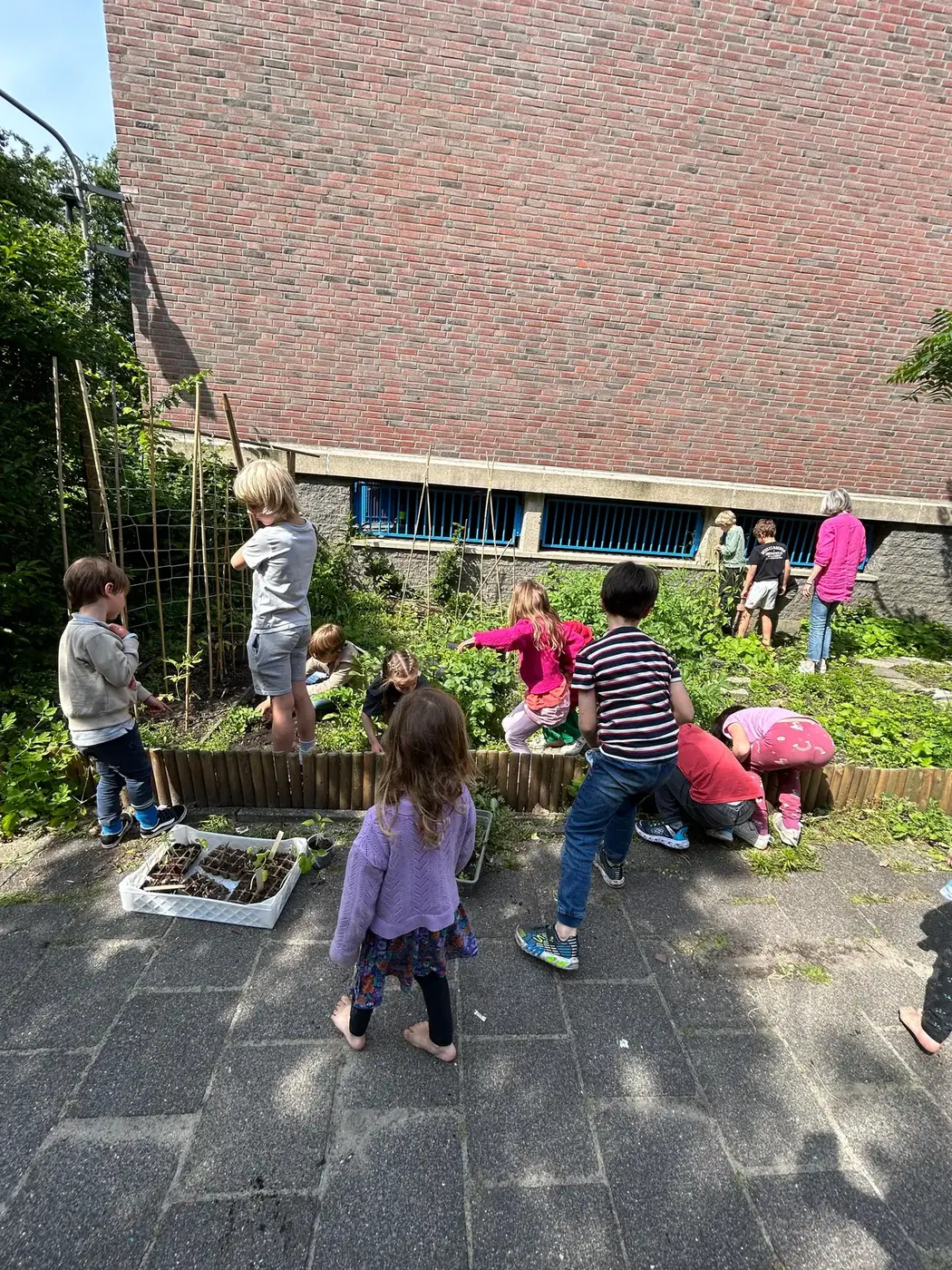
Children are part of their surroundings. We want to teach them respect for people, animals, nature, the environment, materials and other cultures. Respect, reverence, love and gratitude are core values for us, so we make a point of living them. When you watch in wonder with a child as a snowflake lands on your mitten, or as the first spring flowers open, you awaken a sense of joy and reverence in the child (and in yourself!).
Sensory development
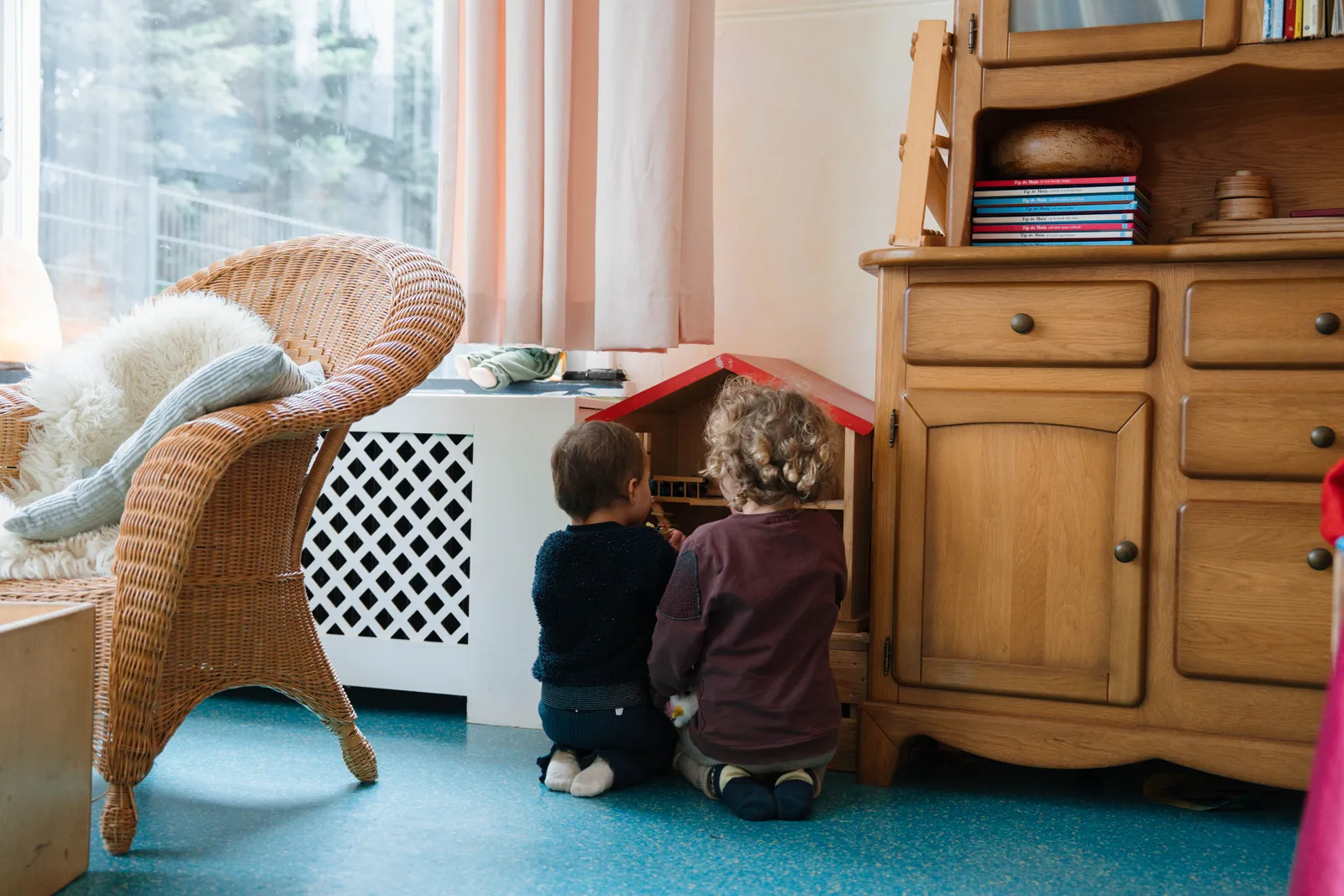
Through our senses we connect with ourselves and with the world around us. A young child is still all senses: every impression comes in unfiltered. Young children have not yet learned to judge impressions on their merits or to shut out what is less good for them. They take in everything. We want to preserve and protect that openness by watching over the quality of what the children see, hear and feel. We carefully match the furnishing and colours of the rooms, the food, the materials and the number of toys to this.
Four senses are central for young children: the sense of touch, the sense of movement, the sense of balance and the sense of life (a sense of well-being). A well-developed sense of touch gives children trust in the world. That is why the quality of materials matters, and why we deliberately choose natural materials.